Need Help? Email Me HERE
For Professionals Who Are Tired Of Losing Hours To Mindless Scrolling
New 7-Day Protocol Shows The 6 Hidden Dopamine Drivers That Make You Reach For Your Phone... And How To Redirect Them In Just Minutes
Extract Your Freedom From Phone Addiction In The Next 7 Days Using This Science-Backed System Developed By A 25-Year Silicon Valley Insider... Even If You've Tried Everything And Failed Before
If you're on this page watching this video, chances are you already KNOW there's a problem with your phone use. You've seen your Screen Time numbers. You've felt the guilt. Maybe even tried to fix it once or twice.
But here's the thing nobody says out loud...
Knowing it's a problem and actually SOLVING it are two completely different things.
If you're like most professionals, you're probably sick and tired of losing hours every day to mindless scrolling... And if nothing changes, 6 months from now you'll still be trapped in the same cycle.
Right now, you're probably:
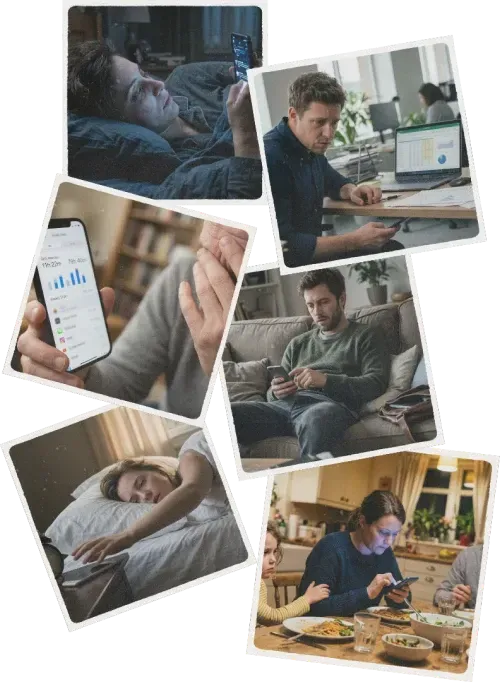
Reaching for your phone before your brain even registers the decision — your hand moves automatically
Losing 4-6 hours every day to personal screen time, even though you "don't have time" for important things
Feeling guilty and ashamed when you see your weekly Screen Time report showing 30+ hours
Watching your family give you "that look" when you're scrolling instead of being present
Trying the same failed solutions over and over: willpower, app blockers, digital detoxes — nothing sticks
Feeling like you're disciplined in every other area of life except this one thing you can't control
Every day you continue this pattern, you're losing approximately
$250 in potential productivity
And the worst part?
Every day that goes by, the algorithms get smarter, more personalized, more addictive - while you're still fighting with the same broken strategies that have never worked.
You lie awake at night knowing you have valuable knowledge that could help thousands of people, but you're paralyzed by the fog of phone addiction.
You watch others with half your expertise build thriving businesses while you're stuck in the "someday" trap, your attention hijacked by an endless scroll.
Join Now For $27
YOU'RE GETTING $756+ IN VALUE TODAY
Join The 7-Day Phone Freedom
Protocol For Just $756 $27
Complete System. Delivered Instantly.
Get Access Right Away.

7-Day Money-Back Guarantee

But Right Now, We're Living In The BIGGEST Opportunity Window In History To Finally Solve This Problem...
Here's why this moment is critical:
Neuroscience breakthroughs have revealed exactly how impulse behavior works — and how to redirect it
The asymmetry is finally being exposed — you can now use the same science that tech companies use against you
Early adopters who understand their Dopamine Drivers are reclaiming 3-4 hours daily while others stay trapped
This creates an UNPRECEDENTED advantage for those who act now
But this window won't stay open forever... The longer you wait, the more sophisticated the manipulation becomes. Every day you delay, someone else is reclaiming their attention and building the life you want while you're still stuck in the scroll trap.
⚠️ WARNING
What I'm About To Share Might Contradict Everything You've Been Taught About Phone Addiction...
From: Thom Location: Silicon Valley
If you're reading this, then chances are you know you're wasting hours every day on your phone, but you can't seem to stop. I know exactly how you feel because I was trapped in the exact same cycle.
There's a moment I'll never forget.
I was sitting at my desk, needing to walk across the room to grab something. A simple task. Ten feet. Maybe fifteen seconds.
But before I stood up, my hand reached for my phone.
I didn't decide to do it. My brain didn't say "grab the phone." My hand just... moved. On its own. Before I even registered what was happening, I was holding it — thumb already scrolling — standing in the middle of the room with no memory of picking it up.
That was the moment I knew something was wrong.
Not "I should probably cut back" wrong. Something is controlling me wrong.
What made it worse?
I knew exactly how it worked.
I spent 25 years inside Apple and Microsoft. I sat in the rooms where engagement systems were designed. I understood variable reward schedules, notification architecture, feed algorithms — the entire psychological machinery built to keep your thumb moving and your eyes locked on a screen.
I knew the trap from the inside. And I still couldn't get out.
That's when I realized something that changed everything:
Knowledge is not enough. Understanding the manipulation doesn't free you from it. Knowing you're being played doesn't stop the hand from reaching.
The years before I figured this out were expensive — in ways I'm still calculating.
The most concrete cost came on an ordinary workday when a colleague started asking me questions I couldn't answer. Not because I didn't know the answers. Because I was exhausted.
Foggy.
Running on four hours of sleep after another midnight TikTok spiral that my clever brain had justified with "I deserve a break after a hard day."
I lost that job.
And here's the part that still stings: I didn't connect the dots. Not then. I blamed the colleague. I blamed the company.
It took years before I looked back and saw the real culprit — the cascading disaster of scrolling past midnight, wrecked sleep, ADHD amplified by exhaustion, a fog so thick I couldn't see it was a fog.
I tried everything to fix it. Willpower. App blockers. Screen time limits. Digital detox weekends. Accountability partners.
I have a BA in Social Work and a library full of books on habit and behavior change. I understood the dopamine system intellectually. I could explain it to you right now.
None of it worked.
Every solution had the same fatal flaw: it tried to stop the impulse. Block it. Suppress it. White-knuckle through it.
And every time, my brain — clever, patient, relentless — found a way back. A justification. A loophole. A special exception. The impulse didn't disappear. It just waited.
From: Thom Location: Silicon Valley
If you're reading this, then chances are you know you're wasting hours every day on your phone, but you can't seem to stop. I know exactly how you feel because I was trapped in the exact same cycle.
There's a moment I'll never forget.
I was sitting at my desk, needing to walk across the room to grab something. A simple task. Ten feet. Maybe fifteen seconds.
But before I stood up, my hand reached for my phone.
I didn't decide to do it. My brain didn't say "grab the phone." My hand just... moved. On its own. Before I even registered what was happening, I was holding it — thumb already scrolling — standing in the middle of the room with no memory of picking it up.
That was the moment I knew something was wrong.
Not "I should probably cut back" wrong. Something is controlling me wrong.
What made it worse?
I knew exactly how it worked.
I spent 25 years inside Apple and Microsoft. I sat in the rooms where engagement systems were designed. I understood variable reward schedules, notification architecture, feed algorithms — the entire psychological machinery built to keep your thumb moving and your eyes locked on a screen.
I knew the trap from the inside. And I still couldn't get out.
That's when I realized something that changed everything:
Knowledge is not enough. Understanding the manipulation doesn't free you from it. Knowing you're being played doesn't stop the hand from reaching.
The years before I figured this out were expensive — in ways I'm still calculating.
The most concrete cost came on an ordinary workday when a colleague started asking me questions I couldn't answer. Not because I didn't know the answers. Because I was exhausted.
Foggy.
Running on four hours of sleep after another midnight TikTok spiral that my clever brain had justified with "I deserve a break after a hard day."
I lost that job.
And here's the part that still stings: I didn't connect the dots. Not then. I blamed the colleague. I blamed the company.
It took years before I looked back and saw the real culprit — the cascading disaster of scrolling past midnight, wrecked sleep, ADHD amplified by exhaustion, a fog so thick I couldn't see it was a fog.
I tried everything to fix it. Willpower. App blockers. Screen time limits. Digital detox weekends. Accountability partners.
I have a BA in Social Work and a library full of books on habit and behavior change. I understood the dopamine system intellectually. I could explain it to you right now.
None of it worked.
Every solution had the same fatal flaw: it tried to stop the impulse. Block it. Suppress it. White-knuckle through it.
And every time, my brain — clever, patient, relentless — found a way back. A justification. A loophole. A special exception. The impulse didn't disappear. It just waited.

The turning point came from an unlikely place: a conference I attended twenty years ago.
I was in a room with some of the greatest ADHD researchers in the world — Ned Hallowell, John Ratey, others. And every single one of them said the same thing, with the same urgency:
"Your brain has absolutely no intention of self-observing."
That sentence planted a seed that took two decades to bloom.
When my own scrolling became undeniable — when I was losing 4 to 6 hours a day, when the midnight binges were wrecking my sleep and my work and my relationships — I came back to that insight. And I started asking a different question.
Not "how do I stop the impulse?"
But "what is the impulse actually trying to tell me?"
I spent months in the research. I assembled the work of 14 world-renowned behavioral scientists and neuroscientists:
Dr. Anna Lembke at Stanford
Dr. Judson Brewer at Brown
Dr. BJ Fogg at Stanford
Dr. Andrew Huberman
Dr. Nora Volkow at the NIH
And 9 others
I read everything. I mapped the convergences.
And when all 14 research streams pointed to the same core principle, I knew I had something.
Impulses are not the enemy. They are signals.
Your brain reaches for the phone because it is trying to meet a real, legitimate need. Escape from stress. Explore when bored. Connect when lonely. Stabilize when anxious. Achieve when restless. Experience Pleasure after a hard day.
The phone is just the fastest, easiest way your brain knows to meet those needs.
Blocking the phone without addressing the need is like putting tape over a check engine light. The warning disappears. The engine is still broken.
Here's what nobody was talking about — and what I couldn't stop thinking about.
The same neuroscience that billion-dollar companies use to keep you scrolling could be used by you to understand and redirect your own impulses.
Google, Facebook, Amazon — they have teams of PhDs studying your impulse behavior. They know your patterns better than you do. They use that knowledge to keep you clicking, scrolling, buying, outraged, isolated.
And you don't even know you have impulse patterns.
That asymmetry is what I decided to fix.
I built the ESCAPE Framework — six underlying needs that drive impulse behavior: Escape, Stabilize, Connect, Achieve, Pleasure, Explore.
I developed the Dopamine Drivers Self-Assessment — a 48-question tool that identifies your personal impulse pattern, your top two Drivers, the specific needs your brain is trying to meet when your hand reaches for the phone.
And then I built the system to make it operational:
A complete 7-day protocol grounded in the ESCAPE Framework and the Dopamine Drivers Self-Assessment, with a tested redirect methodology for each of the six driver types. Every component was refined through hundreds of hours of testing and iteration — informed at every step by the work of all 14 researchers.
The results surprised me.
Not because they were dramatic — though they were. But because of how they happened.
I expected behavior change to require effort. Discipline. Struggle.
Instead, the first thing that changed was simply seeing.
The first thing that changed was simply seeing
The moment I could name an impulse — "That's my Explore need. My brain is looking for novelty" — it lost most of its automatic power. I didn't fight it. I didn't suppress it. I just saw it.
And in that moment of seeing, I had a choice I didn't have before.
Within the first week, I had reclaimed several hours. Not through willpower. Through awareness.
Before I reveal the full system, take 10 seconds to imagine waking up tomorrow and NOT automatically reaching for your phone.
How would that change your daily life?
Introducing
The 7-Day Phone Freedom Protocol: The Science-Backed System That Helps You Reclaim 1-3 Hours Daily In Just One Week...
Picture yourself seven days from now with a clear understanding of WHY your brain reaches for the phone, and a personalized system to redirect that impulse without willpower.
This isn't just another digital detox that fights your brain's reward system. This is a PROVEN methodology that:
Identifies your personal Dopamine Driver pattern — the specific needs driving your phone use
Works WITH your brain's reward system, not against it
Provides immediate redirects that actually satisfy the underlying need
Requires zero willpower — just understanding and a simple system
Don't Just Take My Word For It...
In just the first week of testing this system:
I reclaimed several hours daily through awareness alone
Identified my specific Dopamine Driver patterns
Built a library of redirects that actually work
Shifted from "I have no willpower" to "I understand my brain"
But I'm not the only one...
"I was able to use these impulses as information. Instead of giving in to the cravings or spiraling into shame, I could identify the need underneath."
"It's taught me to be aware of the impulses. It's helped me to rewire my brain to move away from those bad habits."
Dale H.
Writer, 40s
Before I Started
I'd tried other approaches that didn't work
I was skeptical this would be different
I work in a chaotic, high-interruption job
What Surprised Me
It was way simpler than I expected
I'm cheap and it was still worth it
It kept me engaged
Chris W. — The YouTube Binge Stopper
Case Study #1
BACKGROUND
Chris was trapped in YouTube binges that would consume 3+ hours at a time. He'd sit down to "watch one video" and surface hours later with nothing to show for it, feeling frustrated and ashamed.
THE PROBLEM
Every attempt to stop the binges through willpower or app blockers failed. The moment he felt stressed or bored, he'd find himself back in the YouTube rabbit hole.
THE BREAKTHROUGH
Using the ESCAPE framework, Chris identified that his binges were driven by his "Explore" need — his brain was seeking novelty and discovery, and YouTube's algorithm was perfectly designed to feed that need endlessly.
THE RESULT
Chris was able to stop a YouTube binge "cold" — cutting off a 3-hour session mid-stream. Not through willpower, but through awareness.
"I can't believe this actually works. The moment I could see what my brain was actually looking for, the binge just... stopped. Not through willpower — through awareness. Once I could name what was happening ('My Explore need is in a novelty loop'), the automatic behavior lost its grip."
Chris S. — The Life Reclaimer
Case Study #2
BACKGROUND
Chris was caught in YouTube rabbit hole binging that was consuming hours of his life every week. He'd start watching one video about Python programming and end up watching random content for hours, never actually learning anything useful.
THE DISCOVERY
Through the Dopamine Drivers Assessment, Chris discovered he was primarily driven by "Achieve" and "Explore" needs. His brain was seeking accomplishment and discovery, but YouTube was giving him the illusion of both without any real satisfaction.
THE RESULT
Reclaimed 3-4 hours every week that was previously consumed by YouTube binging. Now on Day 8 of a 100-day journey to learn Python (a lifelong dream). Has reclaimed his time and life beyond YouTube, Facebook, and X.
"This system gave me my life back. With my dopamine, focus, and attention no longer hijacked, I finally have time for things I've wanted to do for years but could never find the time for. I'm actually learning Python now instead of just watching videos about it."
Zara — The Signal That Saved Her Sobriety
Case Study #3
BACKGROUND
Zara had been sober for years, but when her neighbor died unexpectedly, she found herself drowning in grief and overwhelmed by work emails from her vacation.
THE CRISIS MOMENT
Her hand automatically went to her phone, but this time it wasn't just scrolling she wanted. For the first time in years, she felt the full weight of cravings for alcohol and something stronger.
THE BREAKTHROUGH
Instead of calling herself weak or broken, the training kicked in: "This is a signal. I need Escape. I need Connection." Not judgment, just recognition of what her brain actually needed.
THE RESULT
She got through the crisis without relapsing. Not perfectly, not gracefully, but she got through it by seeing the impulse as a signal rather than a failure.
"If I had called myself a failure in that moment — if I had treated the craving as proof that I was broken — it could have been months or years to climb back. Instead, I saw the impulse for what it was. Just a signal. Just my brain doing exactly what brains do when the world falls apart."
MQ — Learning to Stabilize Emotions
Case Study #4
BACKGROUND
MQ describes himself as "not the kind of person who talks about feelings." When his girlfriend said something that hit a nerve at dinner, his automatic response was to reach for his phone and scroll until the sting faded.
THE MOMENT OF CHANGE
Instead of reaching for the phone, he opened his mouth and said out loud: "I need to stabilize my emotions." He didn't plan to say it — the training had rewired his automatic response.
THE UNEXPECTED RESULT
His girlfriend put down her fork, really looked at him, and said "Okay. Tell me." They left the food on the table, went to the bedroom, and he talked — really talked — for maybe the first time in their relationship.
"I signed up for this thing to spend less time on my phone. I didn't expect it to teach me how to be in a relationship."
Marique — Generating Her Own Pleasure
Case Study #5
BACKGROUND
Marique had a daily routine of playing CandyCrush in the elevator — 15 minutes of matching colored tiles while going up to her apartment, completely automatic.
THE SHIFT
As her thumb hit the screen to load CandyCrush, she said one word: "Pleasure." The course had taught her to name the need behind the impulse, and her brain had been paying attention.
THE REALIZATION
She put the phone back in her pocket and actually enjoyed the elevator ride and walk to her door — the sound of her shoes, the weight of her bag, the feeling of being alive without needing anything from a screen.
"I can generate my own pleasure. I don't need the phone to do it for me. That's the strangest and best thing I've learned in years."
John — Three Redirects, Zero Regrets
Case Study #6
BACKGROUND
John has a coworker who complains about him constantly. After another public confrontation in a team meeting, he was back at his desk with his head buzzing, ready for his usual 30-minute Facebook numbing session.
THE ANALYSIS
Instead of automatically reaching for his phone, he asked: "What do I actually need right now?" The answer wasn't one thing — it was three: Escape (get away from the mental loop), Connection (hear from people who like him), and Achievement (know his work matters).
THE THREE REDIRECTS
Escape: 10-minute walk around the building — the mental noise dropped by half before he reached the parking lot.
Connection: Texted two friends — not to complain, just to connect. Got a joke and weekend plans in return.
Achievement: Walked into his manager's office and asked directly about his performance — got specific positive feedback and real reassurance.
25 minutes total, all spent on things that actually helped, compared to 30 minutes of scrolling that would have left him feeling the same or worse.
"Three redirects. Zero regrets. And a conversation with my manager that I would never have had if I had reached for the phone instead."
The Most Dramatic Transformation I've Witnessed
What made Chris W.'s transformation so powerful wasn't the amount of time he saved — it was HOW the change happened. He didn't fight the impulse. He didn't block YouTube. He didn't white-knuckle through it.
He simply became AWARE of what was happening — he could name the impulse, name the need, and choose a different response. The binge stopped not because he resisted it, but because he SAW it.
That's the transformation: from unconscious compulsion to conscious choice.
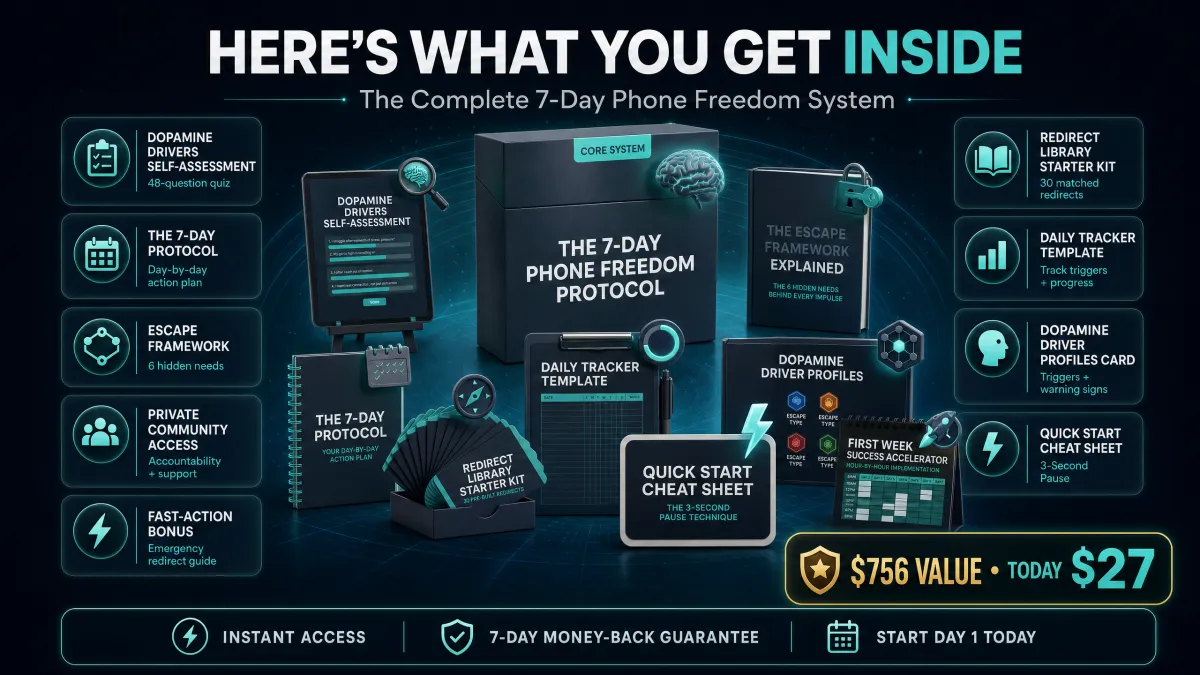
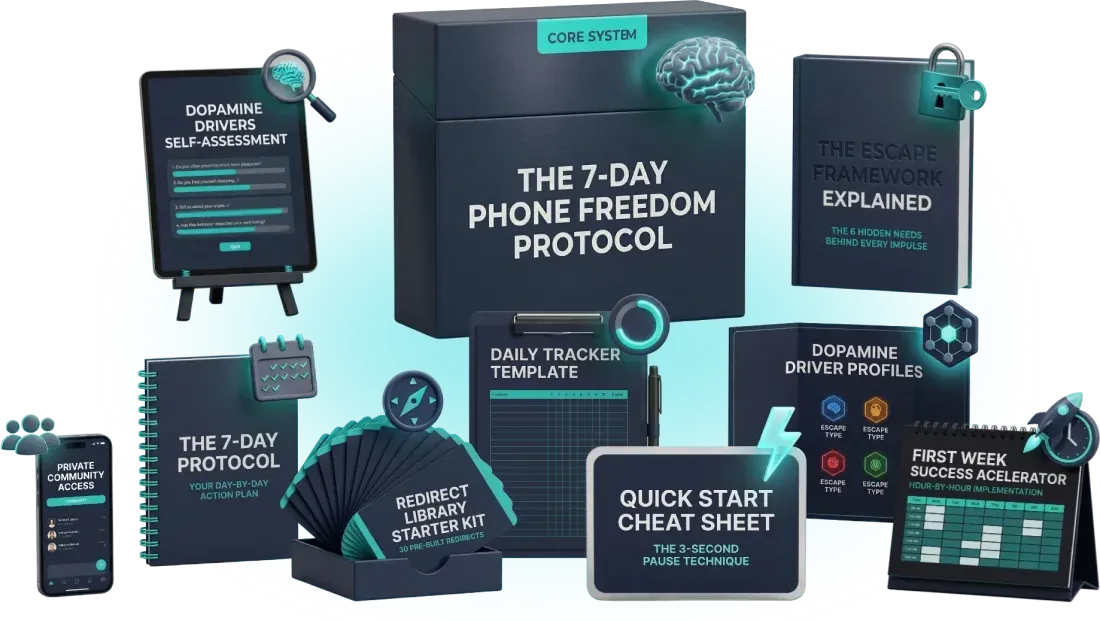
Here's Everything You Get
When You Join The 7-Day Phone Freedom Protocol Today:
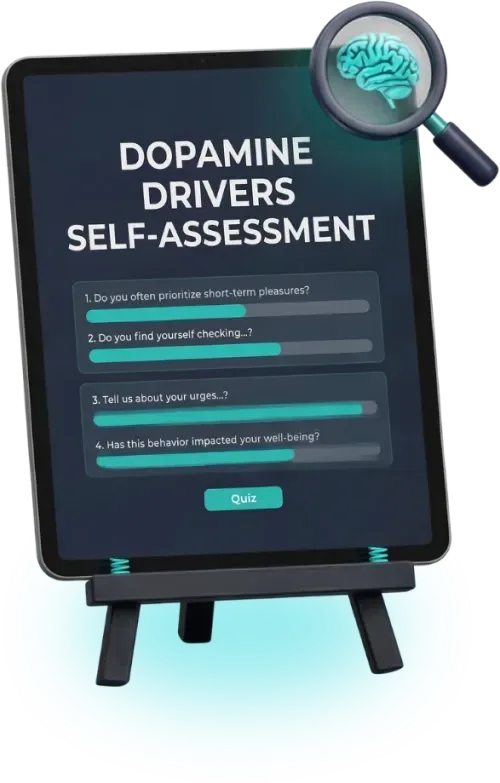
Component 1
The Dopamine Drivers Self-Assessment
$97 Value
48-question scenario-based quiz that identifies your top 2 impulse patterns from 6 types
Discover whether you're driven by Escape, Stabilize, Connect, Achieve, Pleasure, or Explore
Creates the "aha moment" of understanding WHY you reach for your phone
Maps your personal brain pattern like a Love Language for impulse behavior
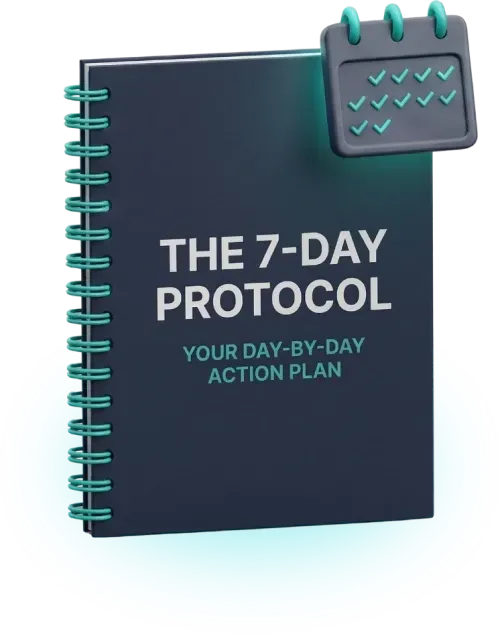
Component 2
The 7-Day Protocol
$197 Value
Day-by-day action plan tailored to your specific Dopamine Driver type
Day 1: Baseline tracking + trigger identification
Day 2: 3-Second Pause technique + need naming
Day 3: Function-matching (replacing phone with same-need activity)
Day 4: Environment editing (one physical change that disrupts triggers)
Day 5: Building your personal Redirect Stack (5 go-to alternatives)
Day 6: 4-hour phone-free challenge with Driver-specific strategies
Day 7: Results measurement + maintenance planning
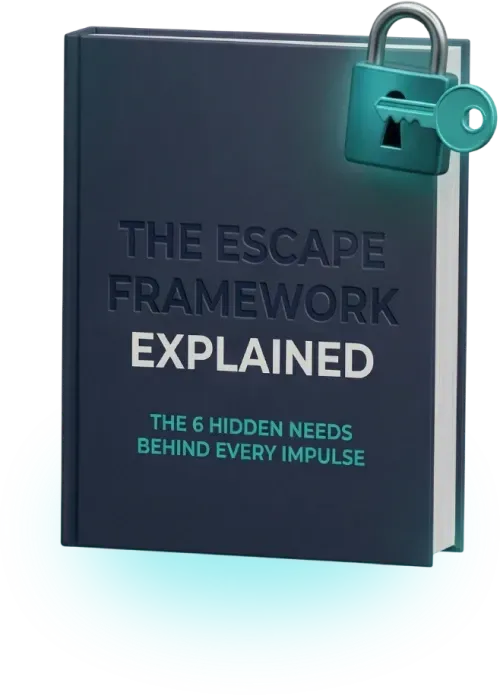
Component 3
The ESCAPE Framework Explained
$147 Value
Clear explanation of the 6 underlying needs that drive ALL impulse behavior
Real-world examples for each Driver type
Self-reflection prompts to deepen your understanding
How to read impulses as signals rather than failures
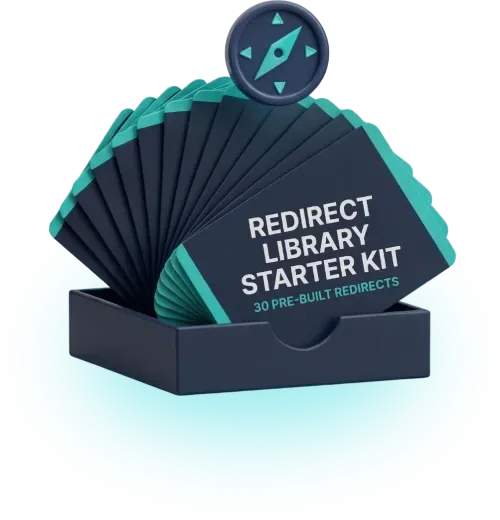
Component 4
Redirect Library Starter Kit
$97 Value
30 pre-built redirect suggestions organized by your Dopamine Driver type
Each redirect rated by time required (1 min, 5 min, 15 min) and energy level
Scientifically matched to satisfy your specific underlying needs
No more guessing what will actually work for YOUR brain
Component 5
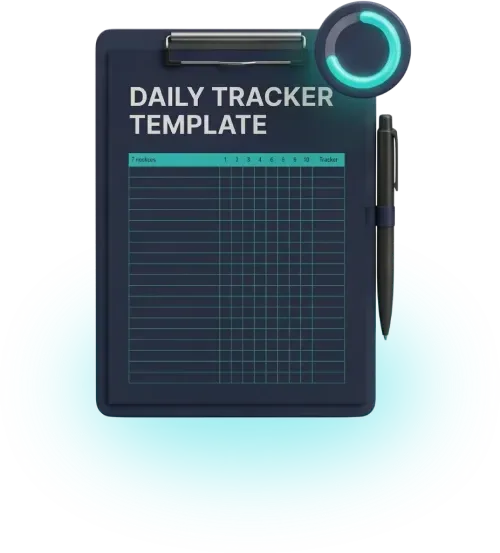
Daily Tracker Template
$47 Value
Printable one-page tracker for logging impulse moments
Space to name the underlying need and record which redirect you used
Track effectiveness over time to build your personal success library
Plus, JOIN TODAY
And You'll Also Get:
Bonus 1
"Quick Start" One-Page Cheat Sheet
$27 Value
Printable reference card with the 3-Second Pause technique. Start practicing immediately without reading the full guide first.
Bonus 2
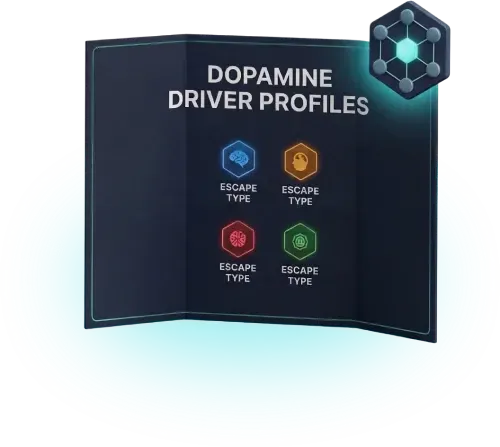
"Dopamine Driver Profiles" Reference Card
$47 Value
Visual reference showing all 6 ESCAPE types with triggers and warning signs. Best redirects for each type at a glance.
Bonus 3
Private Community Access
$97 Value
Join others on the same journey for accountability and support. Share your Dopamine Driver type and learn from others with similar patterns.
Total Real-World Value: $756
Your Investment Today:
Just $27
That's just $0.90 per day — less than a cup of coffee
You Save: $729
You Save: $729
⚡️Fast-Action Bonus
⚡️Fast-Action Bonus
Order In The Next 48 Hours And You'll Also Get:
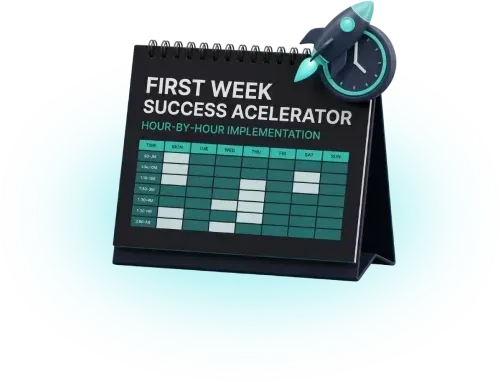
🚀 The "First Week Success" Accelerator ($147 Value)
Available ONLY for the next 48 hours!
Hour-by-hour implementation schedule for maximum results
Emergency redirect guide for high-trigger situations
Direct email access for urgent questions during your first week
Same-day feedback on your Dopamine Driver assessment results
This bonus disappears when the timer hits zero — no exceptions!
Let's be honest about what this is really worth:
To get similar results elsewhere, you'd need to:
Hire a behavioral psychologist (10 sessions)
$2,000Individual courses on dopamine, habits, and focus
$500+Digital wellness program (6 months)
$1,782Productivity apps and tools
$300+Total if purchased separately:
$4,582+Your complete investment today:
Just $27
That's less than most people spend on coffee in a week, but this $27 investment could reclaim 1,500+ hours of your life this year.
When you break it down:
$27 ÷ 365 days = $0.07 per day
For less than 7 cents a day, you get access to a complete system that could transform your relationship with technology forever.

My "First Results in 7 Days" Promise
Complete the 7-Day Protocol exactly as outlined. If you don't see measurable reduction in your Screen Time within 7 days, just send one email to [email protected] with subject line "REFUND REQUEST" and I'll process your refund within 48 hours with no questions asked.
You keep everything. Total value you keep: $903
This means I'm taking ALL the risk here. The only way you can lose is by not trying this today.
No questions asked. No hard feelings. No hoops to jump through.
⚠️ WARNING
This Opportunity Window Is Closing
Here's why this is urgent:
The algorithms are getting smarter every day — the longer you wait, the harder it becomes to break free
Early adopters who understand their Dopamine Drivers are gaining massive advantages while others stay trapped
This asymmetry won't last forever — soon everyone will know these techniques
Every day you delay costs you approximately 4-6 hours of lost time and productivity
The people who take action in the next 24 hours will be the ones who look back on this moment as when everything changed. The people who wait will still be scrolling six months from now, wondering "what if."
You Now Stand At A Crossroads
Path 1: Stay The Same
Continue the same pattern that brought you here today
Six months from now, you'll still be losing hours to mindless scrolling, feeling guilty about screen time, and watching others build the life you want while your attention remains hijacked.
Path 2: Take Action
Join The 7-Day Phone Freedom Protocol today
Within 7 days, you could be redirecting impulses automatically, reclaiming 3-4 hours daily, and finally feeling in control of your own attention.
The choice is yours
Here's What To Do Next...
To get similar results elsewhere, you'd need to:
Click the button below (takes 30 seconds)
Enter your information (takes 2 minutes)
Get instant access to your Dopamine Drivers Assessment (immediate)
Discover your personal impulse pattern and start Day 1 (today)
In just 2 minutes from now, you'll know exactly why your brain reaches for the phone. By this time tomorrow, you could be practicing your first successful redirect.
Frequently Asked Questions
Who is this for?
+The 7-Day Phone Freedom Protocol is perfect for professionals, entrepreneurs, and anyone who knows they spend too much time on their phone but can't seem to stop. It's ideal if you've tried willpower, app blockers, or digital detoxes without lasting success. This is NOT for people who are happy with their phone use or those seeking therapy for clinical addiction.
How long will it take to see results?
+Most people experience the "aha moment" of understanding their Dopamine Driver pattern within 10 minutes of taking the assessment. Measurable screen time reduction typically occurs within the first week, with 1-3 hours daily reclaimed by Day 7.
What if I'm not tech-savvy?
+You don't need any technical skills. This is a simple PDF guide with step-by-step instructions. If you can read and follow directions, you can use this system successfully.
Will this work if I've tried everything else?
+Yes, because this approach is fundamentally different. Instead of fighting your impulses (willpower, blocking, restriction), this system teaches you to read them as signals and redirect the energy. It works WITH your brain's reward system, not against it.
What makes this different from other solutions?
+Three key differences: (1) It's the only typology-based approach that personalizes based on your specific Dopamine Driver pattern, (2) It uses redirection instead of suppression, so no willpower required, (3) It's backed by research from 14 world-renowned behavioral scientists and created by a 25-year Silicon Valley insider.
How does your guarantee work?
+Simple. Complete the 7-Day Protocol and if you don't see measurable Screen Time reduction, email us for a full refund. You keep all materials. No questions asked, no hoops to jump through.
Is this a subscription or one-time payment?
+This is a one-time payment of $27. No recurring charges, no hidden fees. You get lifetime access to all materials.
Still on the fence? Remember...
You're protected by our 7-Day Results Guarantee
You get $903+ worth of value for just $27
The Fast-Action Bonus expires in 48 hours
Every day you wait costs you 4-6 hours of lost time
The only way you can lose is by not taking action today
You're protected by our 7-Day Results Guarantee
You get $903+ worth of value for just $27
The Fast-Action Bonus expires in 48 hours
Every day you wait costs you 4-6 hours of lost time
The only way you can lose is by not taking action today
This isn't really about buying a product.
This is about deciding who you want to be.
Right now, you're someone who has impulses but struggles to control them. Someone who watches others succeed while wondering how they do it. Someone who knows they're capable of more but doesn't know how to unlock it.
But the person who invests in this system becomes someone different:
Someone who understands their brain patterns. Someone who redirects impulses instead of fighting them. Someone who reclaims their attention and builds the life they want.
Your decision right now determines your identity going forward.
P.S. You have 3 to 10 seconds between the impulse firing and the automatic behavior executing. That window is where your life is. The 7-Day Phone Freedom Protocol teaches you to live in that window. $27. Seven days. The rest is yours.
Join Now For $27
YOU'RE GETTING $756+ IN VALUE TODAY
Join The 7-Day Phone Freedom
Protocol For Just $756 $27
Complete System. Delivered Instantly.
Get Access Right Away.
7-Day Money-Back Guarantee
Privacy Policy | Terms Of Service
© 2026 impulse navigator. All rights reserved.